Dogs with allergies often require special diets without key allergens. Here are the best dog foods for dogs with sensitive stomachs.
Table of Contents
Does your dog seem to be allergic to just about everything? If so, this means that you will need to find a dog food that your pet’s tummy can tolerate. This can be a frustrating challenge when you aren’t sure about your pet’s specific allergy. Fortunately, there are dog foods out there that are allergy-friendly. We’re here to help you navigate which types of dog food may be right for your furry friend. And not to worry — they taste just as good thanks to ingredients like turkey, lamb, and beef.
Types of Dog Allergies
Allergies are not uncommon in dogs. In fact, there are three common types of allergies that dogs can experience: environmental, parasitic, and food. Let’s learn more about each type.
Environmental Allergies
Many people have seasonal allergies or allergies caused by environmental factors such as pollen, dust, grass, and more. Our dogs can have the same problems. In the case of environmental allergies, symptoms often get progressively worse over time and show more severe symptoms in certain seasons.
These allergies often manifest as atopic dermatitis, which is an inflammatory skin disease. The most commonly affected parts of the body are the ears, wrists, ankles, muzzle, groin, and eyes.
Parasitic Allergies
Parasitic allergies, like those caused by pesky fleas, are problematic, especially in warmer weather. Often, these allergies are seasonal because fleas can’t survive when the weather is cold. Reactions will generally occur in the warmest areas of your dog’s body, such as the lower back, hind limbs, stomach, and base of the tail.
Food Allergies
Only about 10 percent of all canine allergies are food-related. However, dogs do sometimes develop food allergies that require special diets. Food allergies manifest as skin reactions. Some of the most common canine food allergens include:
Beef
Chicken
Wheat
Corn
Soy
Eggs
Dairy
Yeast
Many dog foods contain at least one of these ingredients, so pet owners might experience some difficulty finding a diet that eliminates the source of their pet’s allergies.
Types of Dog Foods for Dogs with Allergies
Two different types of pet food are good for dogs with allergies: limited ingredient and hypoallergenic.
Limited Ingredient Dog Foods
The best dog food for dogs with allergies are limited ingredient foods. A limited ingredient diet contains fewer different components. These foods help pet owners better understand the specific allergen that is causing their dog problems. Keep in mind, any dog owner can purchase limited ingredient dog foods, because they are sold without a prescription from a vet.
Hypoallergenic Dog Foods
So how are hypoallergenic foods made, you might be wondering? Hypoallergenic dog foods are made using special processes that chemically divide proteins into their basic amino acid building blocks. This process can make the problem allergen seemingly vanish, making it unnoticeable to your pet’s immune system. Hypoallergenic dog foods are less likely to cause an allergic reaction in your dog.
The Best Dog Foods for Dogs with Allergies
Here’s our list of the top five best dog foods for dogs with allergies.
Canidae Grain-Free Pure is a limited ingredient dog food that comes in 11 different formulations. One of the most allergy-friendly dog food recipes is the Real Salmon and Sweet Potato variety. This food tops our list as the best dog food for dogs with allergies because it derives most of the meat protein from salmon, including salmon meal, and it lacks all grains. The fat-to-protein ratio is about 56 percent, and the food contains healthy fats from the oil in the fish.
In addition to salmon and salmon and menhaden fish meals, the first five ingredients are rounded out with sweet potatoes and peas, which provide essential nutrients for adult dogs. Canidae’s Pure line of dog foods never include corn, soy, or wheat ingredients, all of which are common allergens for dogs with skin allergies.
Other popular recipes include the Real Lamb and Pea and Real Duck and Sweet Potato varieties. Canidae also offers both Puppy and Senior dog foods should your dog have both allergies and age-specific needs.
Wellness’ Simple line of dog foods is an excellent option for dogs with food sensitivities. Six different Wellness Simple Limited Ingredient Diet recipes could help dogs with food allergies and sensitivities. The Turkey and Potato formula is a popular choice for pet owners due to its simple ingredient list that starts with deboned turkey, turkey meal, potatoes, peas, and dried ground potatoes.
This food has a fat-to-protein ratio of around 46 percent, making it a great option for adult dogs. The limited ingredient formulas are single-protein recipes, so the main protein the only protein in the dog food, making this a safe choice for dogs with specific protein allergies.
Other recipe options include Salmon and Potato, Lamb and Oatmeal, and Salmon and Peas. Wellness Simple also offers formulas specifically for small breed dogs, as well as wet options.
For dogs with food allergies, hydrolyzed formulas offer reduced risk for allergy flare-ups. With only two options for flavors, dog owners might feel a bit restricted. Flavors include Vegetarian and Chicken. Unlike some of the other foods on our list, Purina Pro Plan Veterinary Diets Hydrolyzed Formulas might contain corn and soy products; however, they are grain-free.
The majority of the protein in both recipes is hydrolyzed soy protein isolate. In the vegetarian formula, hydrolyzed soy protein isolate is the only protein. Both formulas were made specifically with food allergies and sensitivities in mind. In fact, this food is designed for dogs with food allergic gastroenteritis or dermatitis, food intolerance, inflammatory bowel disease, or pancreatitis. In these foods, the fat-to-protein ratio is around 53 percent.
Royal Canin offers four different formulas in its Veterinary Diets Hydrolyzed Protein line of dry dog food. These formulas were created with GI and skin reactions in mind, and each formula also helps support GI health with special prebiotics and fibers.
Unlike many of the other allergy-friendly dog foods, this brand includes brewers rice. The main source of protein in these foods is hydrolyzed soy protein.
Many allergy-friendly foods are made just for adult dogs. However, Royal Canin makes foods that are safe for dogs in all stages of life. There is even a lower calorie option for dogs who need to lose weight.
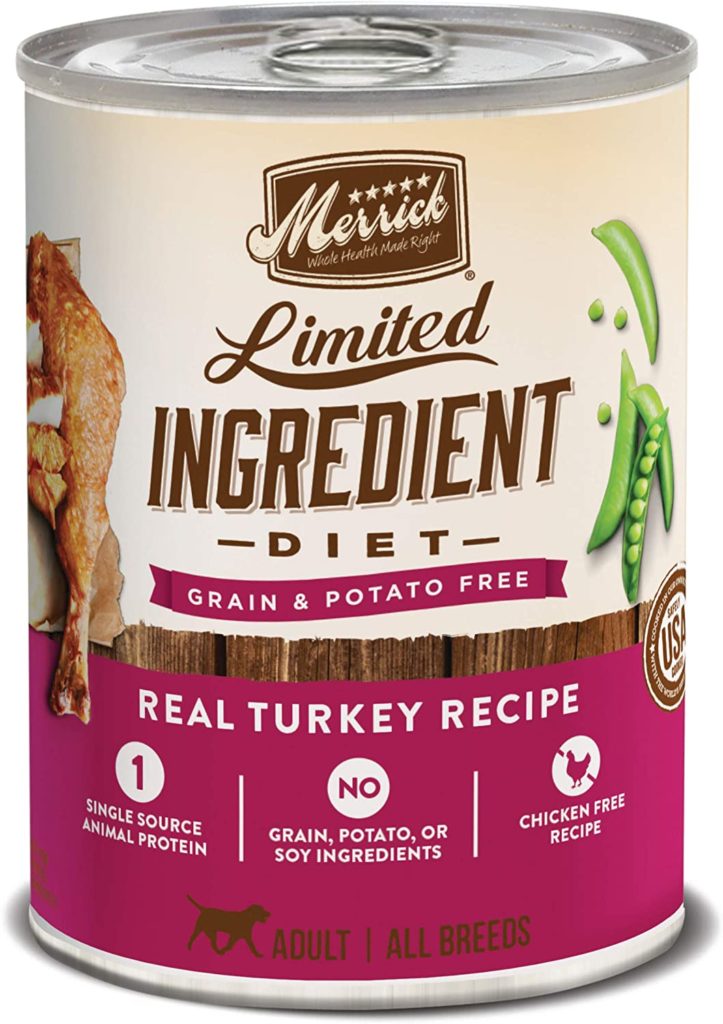
As the only wet food option on our list, Merrick offers a grain-free, allergy-friendly food for dogs who need or prefer wet foods. Merrick Limited Ingredient Diet Grain-Free comes in five different flavors, and one of the most popular flavors is Turkey.
Merrick Limited Ingredient Diet Grain-Free Turkey derives most of its meat protein from deboned turkey. Other top five ingredients include turkey broth, turkey liver, dried peas, and natural flavor. Other popular flavors include Lamb, Chicken Stew, and Beef.
This wet food is made for adult dogs only, likely based on its fat-to-protein ratio of around 56 percent.
The Good
Five different flavors
Meat is the primary protein source
The Bad
High fat-to-protein ratio
If you are concerned that your dog has a food allergy, it is best to speak to your veterinarian about treatments and food options.
Chelsea Roller has specialized in pet-related writing for more than six years. She was drawn to writing about pets after getting her own dog, a Pomsky named Jacomo (Jock-uh-mo), shortly after college graduation. When Chelsea isn't writing, you will find her cooking elaborate meals or going on long walks with her family.






No comment yet, add your voice below!